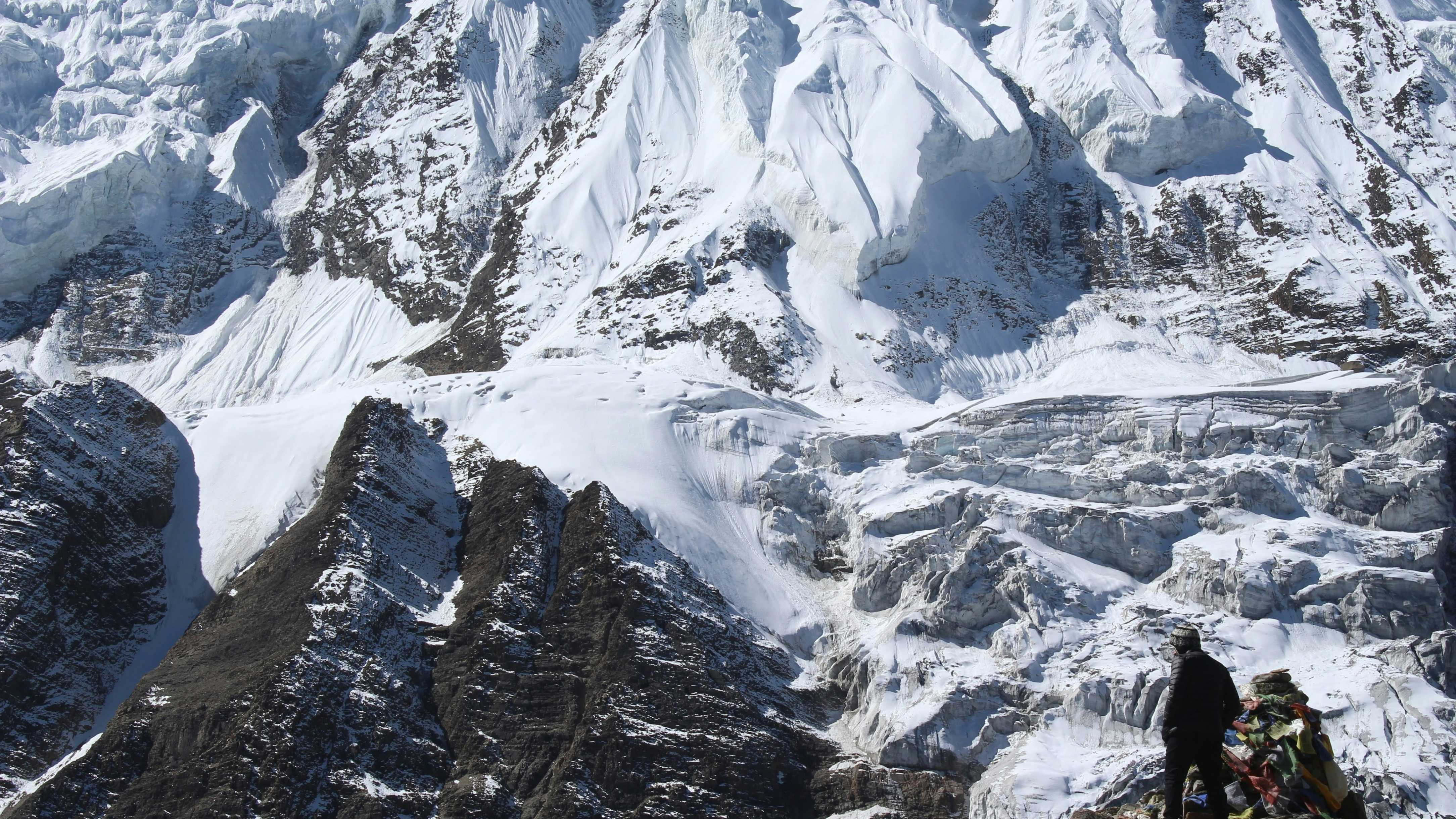
On the 45-degree blue ice of the Lhotse Face, your life depends on 12 steel points. Understanding the physics of crampon penetration is a vital safety skill for any Mount Everest expedition and Everest trekking peak attempt.
You must kick with enough force to penetrate the hard Mount Everest summit ice but not so hard that you shatter it. This balance is a technical skill practiced for weeks at Everest Base Camp before the summit push on an expedition.
Wet snow can stick to the bottom of your crampons, creating a slippery 'ball.' Modern Everest trekking gear uses specialized anti-balling plates to ensure your steel points stay clear for the Mount Everest summit approach.
For technical Mount Everest expedition sections, a rigid crampon is essential to prevent calf fatigue. This precise gear allows you to move with confidence on the exposed ridges toward the Mount Everest summit during your expedition.
Crampons are the primary link between you and the mountain. Treat them with respect and keep them sharp to ensure a safe and successful journey toward the Mount Everest summit.